


Trasmed steps up sustainability: one year of cold ironing at Grimaldi Terminal Barcelona
One year
after the launch of the Onshore Power Supply (OPS, also known as ‘cold ironing’)
system at Grimaldi Terminal Barcelona, Trasmed has confirmed its leading role
in the energy transition of maritime transport in the Mediterranean. The
Grimaldi Group company is among the first to make regular use of this
technology, which allows ships to connect to the onshore power grid while in
port, switching off their engines and eliminating local emissions.
Since March
2025, the ferry Ciudad de Palma, operating on the Barcelona–Palma de
Mallorca route, has been connecting daily to the OPS system at the Sant Bertran
quay. In its first year of operation, the vessel has consumed more than 722 MWh
of renewable energy, preventing the emission of hundreds of tonnes of CO2
and significantly contributing to the reduction of noise pollution in a port
area that is in close proximity to the city of Barcelona. 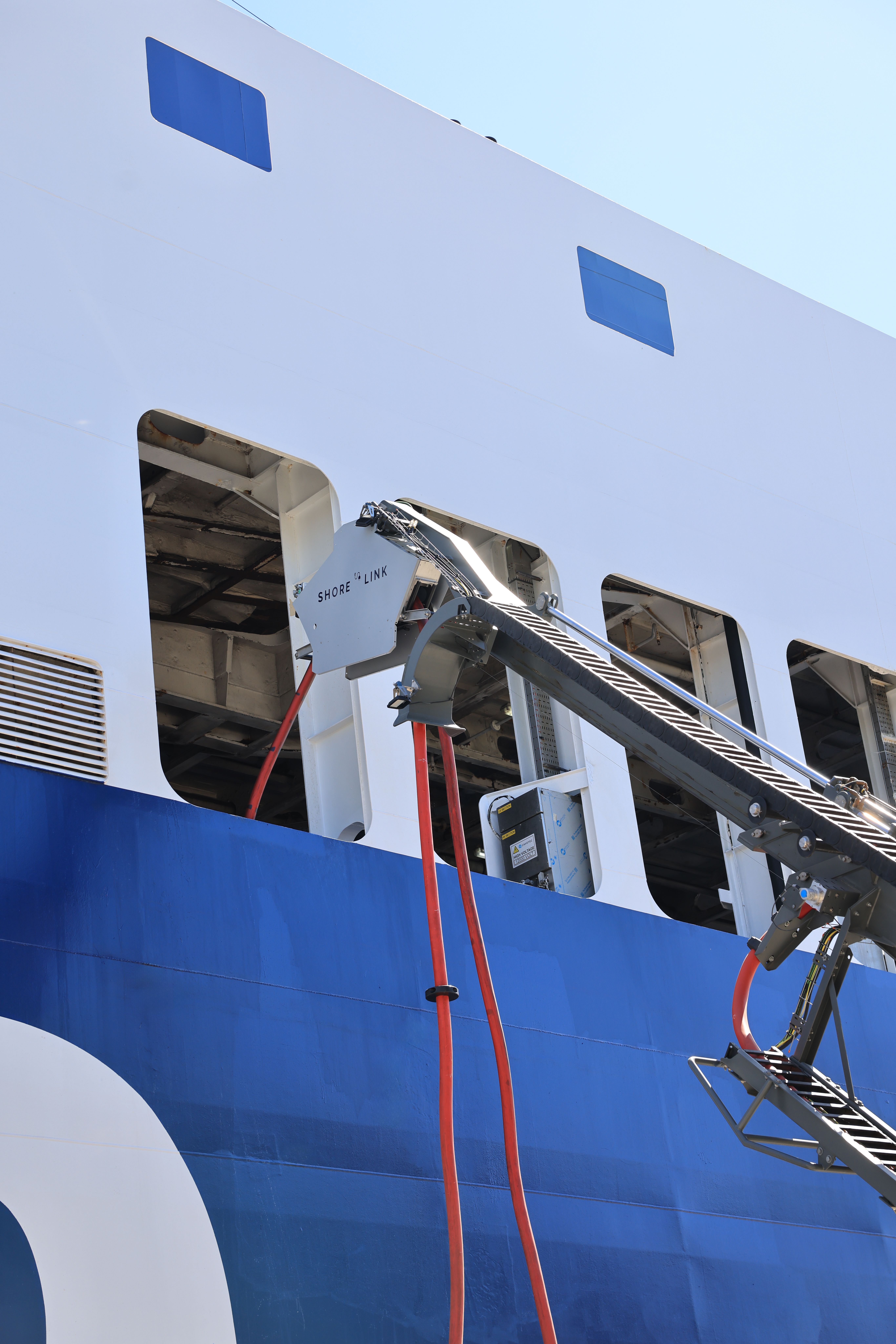
“As a
Grimaldi Group company, Trasmed has a strong commitment to sustainability and
efficiency,” says Miguel Pardo, the Group’s Institutional Relations
Director in Spain. “For this reason, it started connecting to the OPS system
at the Port of Barcelona, using renewable electricity instead of fossil fuels.”
The company
is adapting its entire fleet to connect to onshore power. “The goal is to
extend this solution to all ports served by the fleet by 2028, two years ahead
of the deadlines set by the EU Fit for 55 climate package,” Pardo explains.
“This is not only about reducing the company’s carbon footprint, but also
about improving air quality in the cities that host our daily calls.”
More
broadly, Trasmed has implemented several technological solutions to enhance the
energy efficiency of its vessels, introduced exhaust gas cleaning systems, and
optimized routes and service planning.
The results
are tangible: in 2024, the company achieved a year-on-year decrease in CO2
emissions of 16,600 tonnes, and in 2025 further improved this performance, recording
an additional reduction of 6,200 tonnes – an impact equivalent to removing
around 5,000 cars from the roads each year.
In
addition, improved operations and the rescheduling of certain services have
enabled Trasmed to cut fuel consumption by 11%. This is complemented by route
optimization and enhanced operational planning, which have reduced miles sailed
by 12% while maintaining the same cargo volumes. These measures have been
supported by technical interventions on vessels, such as propeller polishing
and the use of silicone-based coatings that reduce drag.
However,
Trasmed’s sustainability journey is far from over. “We’re continuing to
explore solutions which, through technical and operational improvements, will allow
us to further increase efficiency and reduce our environmental impact,” Pardo
adds, reaffirming the company’s commitment to increasingly green maritime
transport.